Reflecting on ScORSA Live 2026
Inside the Inquiry Room: Reflecting on ScORSA Live and the Lessons the Industry Cannot Ignore
On the 12th of May, at the COSLA Conference Centre in Edinburgh, the ScORSA team held their live event: Mock Public Inquiry & Occupational Road Risk Summit.
For those unaware, the Scottish Occupational Road Safety Alliance (ScORSA) is a project delivered by RoSPA and funded by Transport Scotland to help businesses manage occupational road risk through the project’s free membership platform.
Bringing together transport, fleet and safety professionals from across the sector, the event was able to deliver something far more immersive than a traditional conference agenda. Instead of simply talking about compliance, occupational road risk and regulatory scrutiny, ScORSA Live placed delegates directly inside a realistic Public Inquiry scenario in front of the traffic commissioned - allowing attendees to experience first-hand the pressures, consequences and lessons that often only emerge when organisations face regulatory action.
What became immediately clear throughout the day was that occupational road risk is not a niche transport concern. It sits at the heart of organisational culture, operational resilience and leadership accountability.
A Learning Experience That Felt Real
The centrepiece of the event was the mock Traffic Commissioner’s Public Inquiry, delivered by the Weightmans transport team alongside a barrister acting as the Commissioner.
Using the fictional case of Safe Runnings Logistics Ltd, delegates followed the fallout from a near-miss incident involving a wheel detachment on a vehicle travelling along the A82 towards Glencoe. While the scenario was fictional, the issues explored felt very real.
As the inquiry unfolded, the story exposed how seemingly isolated operational failings can quickly reveal wider weaknesses within an organisation. Walkaround checks, defect reporting, tyre management, maintenance oversight, driver wellbeing and fatigue management all became part of a much bigger conversation about culture, governance and accountability.
What made the session particularly powerful was the realism of the scrutiny. Delegates were able to observe how evidence is challenged, how management decisions are examined and how regulators assess whether operators have genuinely met the standards expected of them.
The Biggest Lesson: Small Failures Rarely Stay Small
One of the strongest messages to emerge from the day was that compliance failings rarely happen in isolation.
Public Inquiries are often triggered by a single incident, but they frequently uncover deeper systemic issues underneath. The mock inquiry demonstrated how minor oversights, operational complacency or gaps in communication can gradually escalate into serious regulatory concerns when left unchecked.
Perhaps most importantly, the event reinforced that occupational road risk is about far more than vehicles and paperwork. It is about people, behaviours and organisational culture.
Driver wellbeing, fatigue, distraction, mental health, medication management and leadership engagement all formed part of the wider discussion throughout the day. The inquiry scenario highlighted how organisations cannot afford to treat these as separate conversations from compliance - they are intrinsically linked.
That broader perspective appeared to resonate strongly with delegates, particularly as many organisations continue to face increasing operational pressures, driver shortages and growing regulatory expectations.
Turning Discussion into Practical Action
The afternoon Occupational Road Risk Summit shifted the focus from observation to collaboration.
Rather than passive presentations, delegates moved between interactive learning stations, demonstrations and practical discussions designed to help organisations strengthen their own road-risk strategies.
Delegates had the opportunity to test out driver simulators, alcohol detection kits, VR-learning experiences and more.
The interactive format encouraged honest discussion and knowledge-sharing between professionals from different disciplines, reflecting the reality that effective occupational road-risk management now requires collaboration across transport, HR, health and safety, operations and senior leadership teams.
That sense of shared learning and openness was certainly one of the event’s defining strengths.
New Resources Designed to Support Long-Term Improvement
Another key highlight from the day was the launch of the updated ScORSA Best Practice Guide to Managing Occupational Road Risk alongside two new free ScORSA e-learning courses.
The resources were introduced with a clear focus on accessibility and practical implementation - helping organisations of all sizes strengthen driver safety, reduce operational risk and embed better occupational road-risk management into everyday operations.
In a sector where legislation, public scrutiny and operational demands continue to evolve, the importance of practical and accessible guidance cannot be overstated.
Importantly, the event did not simply identify problems; it offered delegates tangible tools to take back into their own organisations and begin applying immediately.
More Than a Conference
Perhaps the most significant takeaway from ScORSA Live was the sense that the industry is increasingly recognising the value of proactive learning.
Too often, organisations only fully understand the seriousness of occupational road risk when they are already facing investigation, enforcement action or reputational damage. Events like this help bridge that gap by creating a safe environment where professionals can learn from realistic scenarios before failures occur in the real world.
The event also highlighted the importance of community within the transport and fleet sectors. Bringing together professionals from different organisations and disciplines created valuable opportunities to share experiences, challenges and solutions.
As delegates left Edinburgh, the overall message was clear: occupational road-risk management cannot be viewed as a box-ticking exercise. It requires continuous attention, strong leadership and a culture where safety, compliance and operational decision-making are fully connected.
And judging by the conversations throughout the day, many attendees left not only with new knowledge, but with a renewed sense of responsibility about the role they play in protecting drivers, organisations and the wider public.
Sign up to our membership for free to access our Best Practice Guide and free e-learning courses: https://www.scorsa.org.uk/membership/
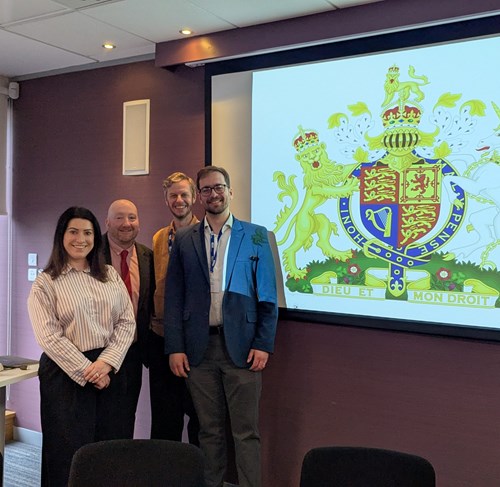
Sarah Jennings, Chris Floyd, Steve Cole, Elliott Kenton