Managing Diabetes in Practice
In Practice: Three Questions on Fitness to Drive We’re launching a new monthly Q&A series spotlighting real insight from ScORSA members and practitioners managing occupational road risk.
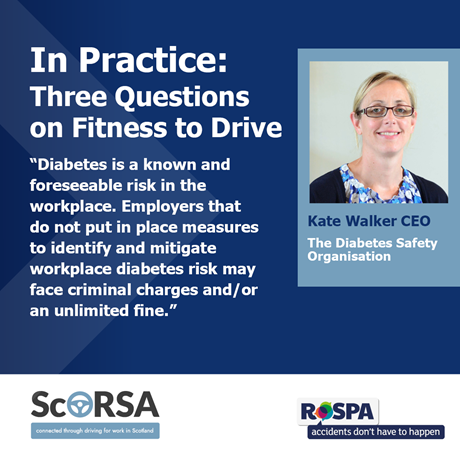
To kick things off, we spoke to Kate Walker, CEO of the Diabetes Safety Organisation and a valued ScORSA member, about diabetes and driving for work.
- Diabetes can present hidden risks when employees drive for work. What do employers most often misunderstand?
“There are many misconceptions about diabetes and driving risk - particularly the impact of undiagnosed or ineffectively managed diabetes. In our recent report, 58% of those surveyed said they’d experienced a non-severe hypo at work and 17% reported a severe hypo.
Half of people with diabetes experience nerve damage to their feet, affecting pedal pressure and potentially causing pedal confusion. In driving simulations, drivers with diagnosed or undiagnosed nerve damage lost control three times more than other drivers.”
- What is one practical step organisations can take?
“Educate managers. Our latest report shows there is still fear around disclosing a diabetes diagnosis. If managers understand the risks and how to put appropriate support and adjustments in place, more employees will feel safe to come forward. That reduces risk from long-term complications and hypoglycaemia.”
- What could happen if organisations fail to recognise diabetes-related driving risks?
“Diabetes is a known and foreseeable workplace risk. Employers who fail to identify and mitigate that risk could face criminal charges and/or an unlimited fine - which would not be insured. There are also DVLA regulations related to driving with diabetes and peripheral neuropathy.”
The message is clear - fitness to drive must include medical risk awareness, supportive disclosure pathways and proactive management