Distraction - Thought Leadership
This month, we asked Steven Duffy, Sales Director at Drive Commander, for his insights.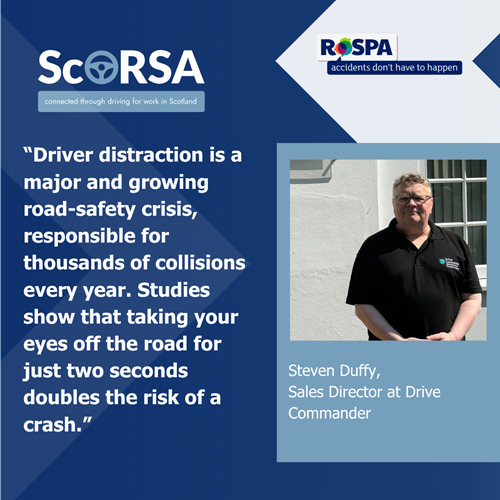
What is the scale of the driver distraction problem?
Driver distraction is a major and growing road‑safety crisis, responsible for thousands of collisions every year. Studies show that taking your eyes off the road for just two seconds doubles the risk of a crash. Mobile phone use is one of the biggest contributors: around one in four road incidents now involves a driver interacting with their phone. For young and professional drivers, the risk is even higher — distraction is a leading factor in serious and fatal collisions.
Driver distraction isn’t a minor risk — it’s a silent killer on UK roads. A driver who looks at their phone for just two seconds is effectively travelling blind, and that tiny lapse doubles the chance of a crash. Police collision data shows that distraction now contributes to thousands of serious incidents every year, with mobile use involved in around one in four. Young drivers are hit hardest: in their first year on the road, distraction is one of the biggest factors in fatal collisions.
Why is managing driver distraction important for employers whose staff drive for work?
Managing driver distraction is vital for employers because it directly protects people, stabilises operations, and reduces financial risk. Distracted driving is one of the most dangerous and costly challenges facing businesses, with every glance at a mobile phone increasing the likelihood of collision, injury, and financial loss. For employers, the moral responsibility is clear: staff who drive for work should not be exposed to preventable harm. Operationally, distraction‑related incidents remove vehicles from service, disrupt schedules, and impact customer commitments. Financially, collisions lead to rising insurance premiums, legal exposure, and expensive repairs. Reducing distraction strengthens safety culture and supports a more resilient, efficient organisation.
What can employers do to reduce distraction and promote safer driving behaviours?.
Employers can reduce distraction and promote safer driving by setting clear expectations, supporting drivers with the right tools, and shaping a culture where focus is non‑negotiable. A strong mobile‑device policy is the foundation, backed by regular training that reinforces why distraction is a major collision risk. Technology such as phone‑locking apps helps remove temptation and ensures consistency across the fleet. Operational planning matters too: realistic schedules reduce pressure and prevent drivers feeling the need to multitask on the move. Managers must model safe behaviour and address unsafe habits early. Recognising and rewarding safe driving helps embed long‑term habits and strengthens the organisation’s safety culture.
Employers can reduce distraction and promote safer driving by setting clear expectations, supporting drivers with the right tools, and building a culture where focus is the norm. The most effective starting point is a clear mobile‑device policy that removes ambiguity about what is and isn’t acceptable on the road. Regular driver briefings help reinforce why distraction is dangerous and how it affects safety, operations, and costs. Technology such as phone‑locking apps can eliminate temptation entirely, ensuring consistency across the fleet. Employers should also plan realistic schedules to reduce time pressure, model safe behaviour at management level, and recognise drivers who demonstrate strong safety habits. These actions build a safer, more resilient driving culture. Training and guidance should also be given to Planning and Operations of the danger in sending work related messages and regular phone calls to the drivers, adding to the danger and distraction.